

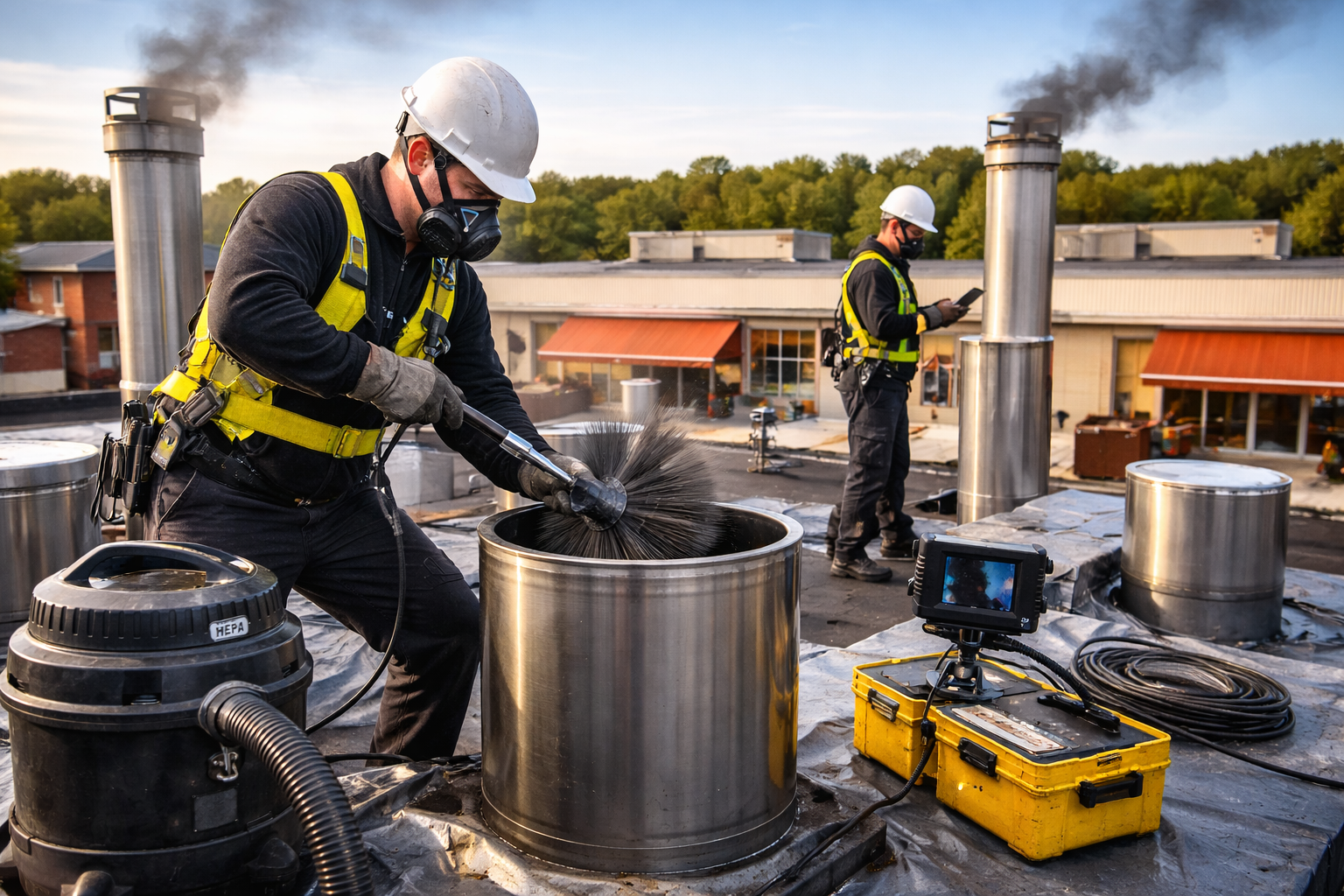
Commercial buildings that use fireplaces, boilers, furnaces, or commercial kitchen exhaust systems rely heavily on properly maintained chimneys and flues. In New Jersey, where strict fire codes, inspections, and insurance requirements apply, commercial chimney cleaning is not optional — it is a critical operational necessity.
Restaurants, apartment buildings, hotels, office complexes, and industrial facilities all face higher risks due to continuous usage, higher combustion output, and regulatory oversight.
This guide explains:
- how commercial chimney cleaning works,
- why commercial systems require a different approach than residential chimneys,
- what risks businesses face when maintenance is ignored,
- which tools professionals use,
- and how New Jersey businesses can stay compliant and protected.
What Is Commercial Chimney Cleaning?
Commercial chimney cleaning is a specialized service designed for high-capacity chimney and flue systems used in commercial and multi-unit properties. Unlike residential chimneys, commercial systems:
- operate more frequently,
- handle higher temperatures,
- accumulate creosote and soot faster,
- and must comply with fire safety and insurance regulations.
Professional commercial chimney cleaning focuses on fire prevention, air quality, operational efficiency, and legal compliance.
👉 Learn more about our professional services on the Chimney Cleaning page.
How Commercial Chimney Cleaning Works
Commercial chimney cleaning follows a structured, compliance-driven process.
1. System Assessment & Inspection
Technicians evaluate the entire chimney system, including:
- flue liners,
- combustion chambers,
- exhaust paths,
- chimney caps and termination points.
For commercial properties in New Jersey, inspections often support fire marshal requirements and insurance documentation.
2. Safety Preparation & Site Protection
Commercial spaces require careful isolation of work areas to avoid business disruption, contamination, or downtime.
3. Heavy-Duty Mechanical Cleaning
Using industrial-grade rotary systems, technicians remove:
- hardened creosote,
- soot buildup,
- grease residue (common in restaurants),
- debris and blockages.
4. Industrial Vacuum & Air Control
HEPA-filtered vacuum systems prevent airborne pollutants, protecting employees, residents, and customers.
5. Post-Cleaning Inspection & Reporting
Businesses receive:
- service documentation,
- maintenance recommendations,
- compliance-ready records for inspections or insurance audits.
Why Commercial Chimney Cleaning Is Essential in New Jersey
Fire Risk Prevention
Creosote and grease deposits are highly combustible. Commercial properties face a significantly higher fire risk due to:
- continuous system usage,
- higher exhaust temperatures,
- shared ventilation pathways.
Carbon Monoxide & Air Quality Risks
Blocked or restricted chimneys can cause dangerous backdrafting, leading to carbon monoxide exposure — a serious liability for businesses.
Code Compliance & Insurance Requirements
New Jersey commercial properties must meet:
- local fire codes,
- building safety standards,
- insurance carrier maintenance requirements.
Neglecting chimney cleaning may result in:
- fines,
- failed inspections,
- insurance claim denial,
- business shutdowns.
Why DIY or In-House Cleaning Is Not Enough
Some commercial property owners attempt basic in-house maintenance. However, this approach is risky and often ineffective.
Common Issues with Non-Professional Cleaning:
- incomplete removal of creosote and grease,
- lack of proper inspection equipment,
- inability to access full flue length,
- no compliance documentation,
- increased liability exposure.
Commercial chimney systems require trained professionals with certified equipment.
Professional Tools Used in Commercial Chimney Cleaning
Commercial systems demand industrial-level tools and expertise.
Equipment Includes:
- high-torque rotary cleaning systems,
- heavy-duty chimney brushes for large-diameter flues,
- flexible rod systems for complex layouts,
- internal chimney inspection cameras,
- industrial HEPA vacuums,
- roof safety and fall-protection systems.
This equipment ensures safe, thorough, and regulation-compliant cleaning.
Which Businesses Need Commercial Chimney Cleaning?
Commercial chimney cleaning is essential for:
- restaurants and commercial kitchens,
- apartment and condominium buildings,
- hotels and hospitality facilities,
- office buildings,
- manufacturing and industrial facilities,
- schools and institutional buildings.
Any property using combustion-based heating or exhaust systems benefits from regular professional maintenance.
How Often Should Commercial Chimneys Be Cleaned?
In New Jersey, recommended service frequency depends on usage:
- Restaurants & high-use systems: every 3–6 months
- Multi-unit residential buildings: at least once per year
- Commercial boilers & furnaces: based on system load and inspections
Regular cleaning reduces emergency risks and ensures uninterrupted operations.
Benefits of Professional Commercial Chimney Cleaning
Professional service provides:
- fire risk reduction,
- improved system efficiency,
- compliance with NJ fire and building codes,
- better indoor air quality,
- documented maintenance records,
- long-term cost savings.
👉 Explore our full range of HVAC & commercial services.
Why Choose Professional Commercial Chimney Cleaning in New Jersey
Commercial chimney cleaning is about more than cleanliness — it’s about risk management, safety, and business continuity.
Partnering with experienced professionals ensures:
- minimal disruption to operations,
- compliance-ready documentation,
- long-term system reliability,
- peace of mind for property owners and managers.
If you’re looking for reliable Commercial Chimney Cleaning in New Jersey, visit our Chimney Cleaning service page and schedule a professional inspection today.