One of the most common questions HVAC professionals hear in New Jersey sounds deceptively simple:
“Why are my heating and cooling bills so high when we haven’t changed anything?”
The home is the same.
The thermostat settings haven’t changed.
The system is the same one you’ve used for years.
And yet, month after month, HVAC-related energy costs continue to climb. For many homeowners and business owners, this becomes the moment they realize something inside the system is no longer working the way it should.
From a professional HVAC cleaning perspective, rising energy bills are rarely about utility prices alone. More often, they are a direct signal that the HVAC system is working harder than necessary just to keep up.
When Efficiency Slowly Disappears
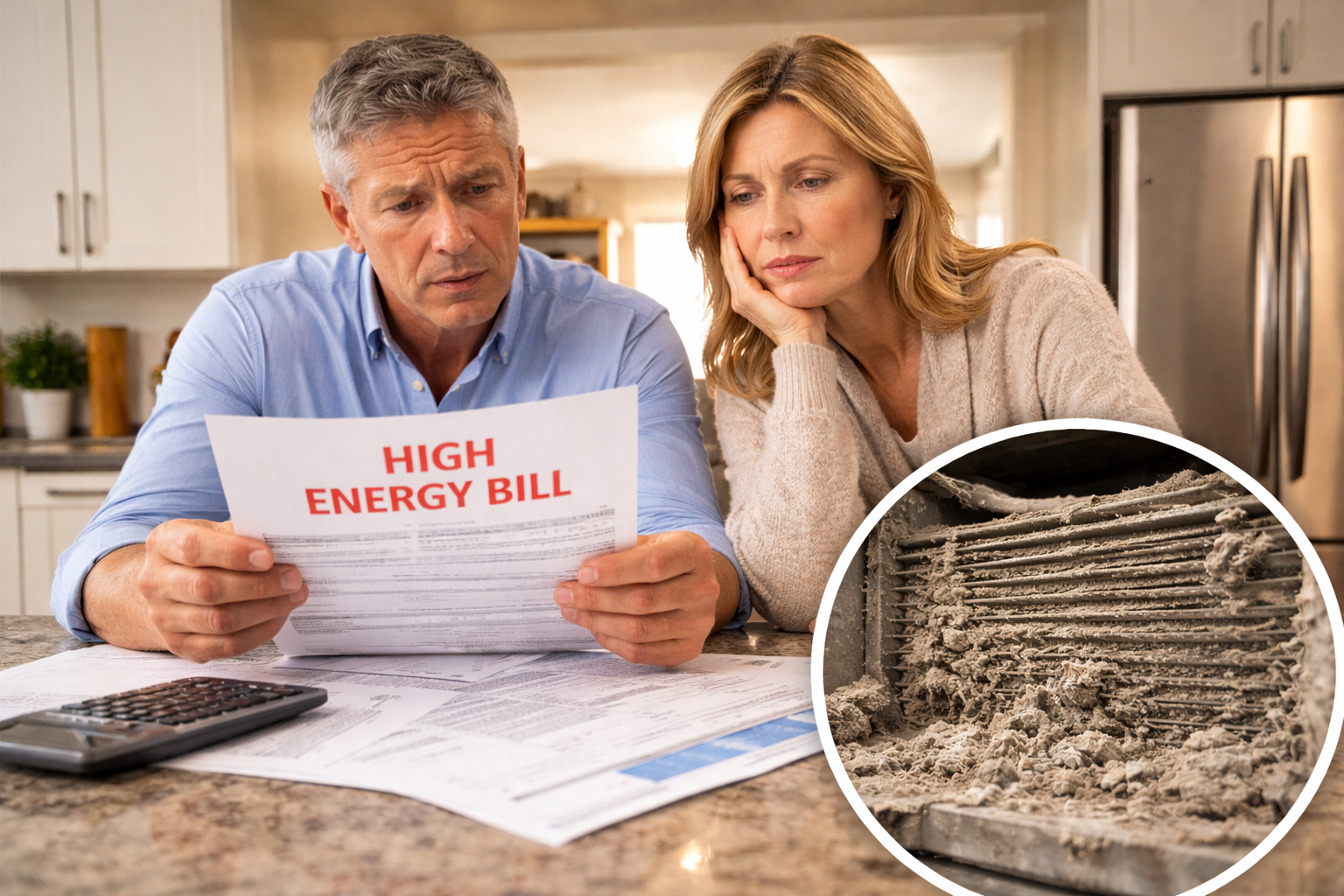
HVAC systems don’t suddenly become inefficient overnight. Efficiency erodes gradually. Dust settles inside ductwork. Coils become coated with grime. Airflow pathways narrow as debris accumulates in places you never see.
As resistance inside the system increases, the HVAC unit compensates by running longer cycles. Fans stay on longer. Compressors work harder. Heating and cooling cycles stretch far beyond what they were designed for.
From the outside, the system still appears to function normally. But internally, it’s operating under constant strain — converting more energy into effort instead of comfort.
This is one of the most expensive forms of inefficiency because it often goes unnoticed until utility bills force the issue.
Why HVAC Systems Consume More Energy as They Get Dirty
An HVAC system is designed around one core principle: unrestricted airflow. When air moves freely, temperature control is efficient and predictable. When airflow is restricted, the system loses balance.
Dirty ductwork, clogged coils, and contaminated internal components reduce heat exchange efficiency. That means the system must run longer to deliver the same temperature change. Every extra minute of runtime adds directly to your energy bill.
From years of hands-on cleaning experience, this is one of the clearest patterns we see. Clients assume the system is aging or underpowered, when in reality it’s simply suffocating from internal buildup.
The Financial Risk of “Letting It Ride”
Many homeowners delay HVAC service because the system hasn’t failed yet. But this is exactly where costs begin to escalate quietly.
Running a dirty HVAC system leads to:
- excessive energy consumption,
- accelerated wear on motors and compressors,
- overheating components,
- and eventually, system failure at the worst possible time.
By the time the system stops working entirely, the damage is often done. Cleaning alone may no longer be enough, and repairs or replacement become unavoidable.
From a professional standpoint, rising energy bills are one of the most reliable early indicators that intervention is needed — while the solution is still relatively simple.
How Professional HVAC Cleaning Reduces Energy Costs
Proper HVAC cleaning removes the resistance that forces systems to overwork. Once airflow pathways are restored and heat exchange surfaces are clean, systems can return to their designed operating efficiency.
After professional cleaning, many clients notice that:
- heating and cooling cycles shorten,
- rooms reach target temperatures faster,
- the system doesn’t run constantly,
- energy usage stabilizes or drops.
This isn’t magic — it’s physics. Clean systems move air more efficiently, transfer heat more effectively, and waste less energy doing unnecessary work.
From an expert cleaning perspective, HVAC cleaning is one of the most cost-effective ways to regain lost efficiency without investing in new equipment.
Why This Matters Even More in New Jersey
In New Jersey, HVAC systems face year-round demand. Cold winters and humid summers mean heating and cooling systems rarely get long periods of rest. This constant use accelerates internal contamination and makes efficiency losses more expensive.
Homes and commercial buildings are also increasingly airtight for energy efficiency, which means HVAC systems recirculate the same air repeatedly. When that air passes through dirty components, energy loss compounds quickly.
In this environment, ignoring HVAC cleaning doesn’t just affect comfort — it directly affects monthly operating costs.
When Rising Bills Are a Warning Sign
If your energy bills are increasing and no obvious explanation exists, it’s time to look inside the system. Waiting for a breakdown is the most expensive way to address the problem.
Professional HVAC cleaning often becomes the turning point where costs stabilize and system performance returns to normal.
- The Air in Your Home Doesn’t Feel Right — And Your HVAC System May Be the Reason
- Your Energy Bills Keep Rising — Even Though Nothing Has Changed
- Your HVAC System Is Running — So Why Is Your Home Still Uncomfortable?

- Commercial Chimney Cleaning in New Jersey: Professional Solutions for Business Safety & Compliance
- Chimney Cleaning in New Jersey: A Complete Expert Guide for Homeowners
- HVAC, Air Duct and Chimney Services in New Jersey: The Complete Guide Homeowners Should Read Before the Next Season